
AI Revolutionizes Military Command Structures Dating Back to Napoleon
Artificial intelligence is set to dramatically transform military command systems that have remained largely unchanged since the Napoleonic era, enabling faster decision-making and more resilient operations.
Artificial intelligence (AI) is poised to revolutionize military command structures that have remained largely unchanged since Napoleon's time. Despite centuries of technological advancements, modern military staffs still resemble their 19th-century counterparts, struggling to adapt to new domains like air, space, and information warfare.
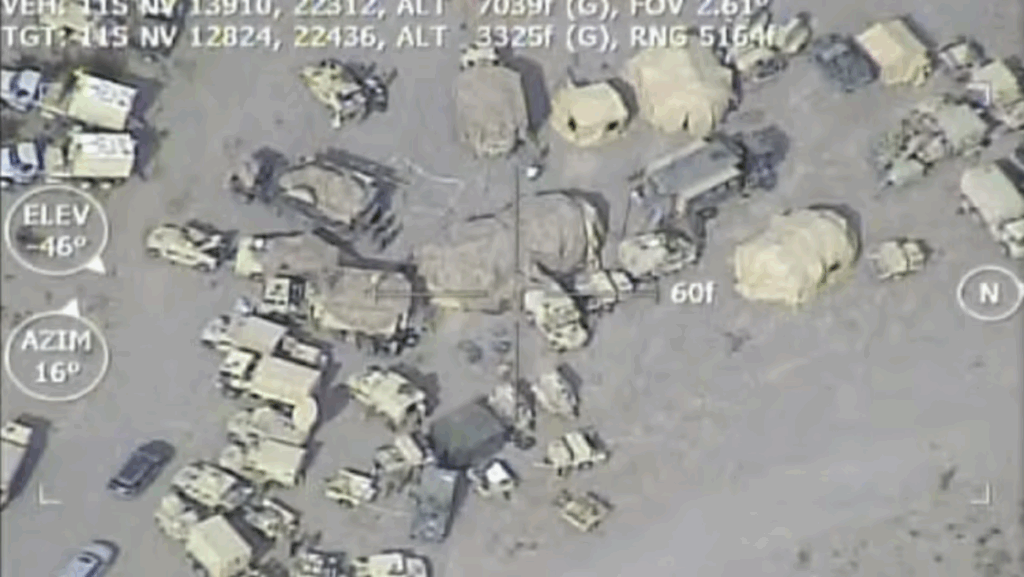 This U.S. Army command post, seen from a drone, is loaded with modern technology but uses a centuries-old structure. Col. Scott Woodward, U.S. Army
The Need for Change
Military headquarters have grown increasingly large to handle expanded information flows, leading to coordination challenges and vulnerability to modern threats like precision artillery and drones. Russia's "Graveyard of Command Posts" in Ukraine highlights the risks of static, oversized command centers.
AI Agents in Military Operations
AI agents—autonomous software powered by large language models—can automate routine tasks, compress decision timelines, and enable smaller, more effective command posts. These agents can parse doctrinal manuals, draft operational plans, and generate courses of action, accelerating military operations. Experiments, including those conducted at Marine Corps University, demonstrate how AI can enhance planning and decision-making.
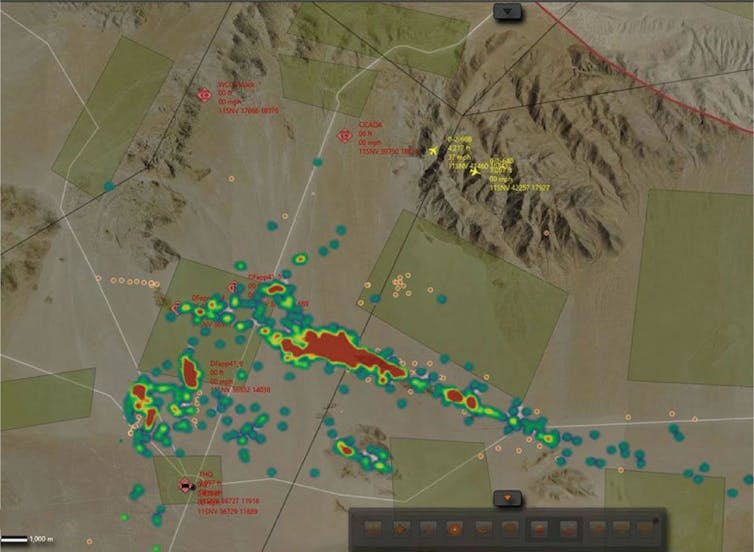 This satellite image shows the electronic emissions of a brigade combat team training at Fort Irwin, Calif. The bright red areas are emissions from command posts. Col. Scott Woodward, U.S. Army
Designing the Future Military Staff
Researchers at the Center for Strategic & International Studies’ Futures Lab explored optimal designs for AI-augmented staffs. The proposed Adaptive Staff Model embeds AI agents within human-machine feedback loops, drawing on doctrine, history, and real-time data to evolve plans dynamically. This model outperformed alternatives in scenarios like joint blockades, firepower strikes, and joint island campaigns.
Related News
AI Scientists Could Win Nobel Prizes by 2050
Researchers debate whether autonomous AI scientists could achieve Nobel-worthy breakthroughs by mid-century, with some predicting success as early as 2030.
OpenAI CEO discusses AI ambitions with UAE president
OpenAI's CEO met with UAE's president to discuss AI cooperation and the country's goals in artificial intelligence research and applications
About the Author

Alex Thompson
AI Technology Editor
Senior technology editor specializing in AI and machine learning content creation for 8 years. Former technical editor at AI Magazine, now provides technical documentation and content strategy services for multiple AI companies. Excels at transforming complex AI technical concepts into accessible content.